Nissan’s Tennessee assembly plant will have the capacity to build 150,000 Nissan LEAF electric cars per year, and 200,000 lithium-ion battery packs per year. Plant productin starts in 2012. Nissan is serious about being the first to put 10,000 electric cars on the U.S. highways, then continuing to build electric car market share leadership. The lithium packs could also be used in future Nissan hybrids. DOE Secretary of Energy Steven Chu announced the $1.4 billion loan agreement with Nissan North America.
100 Electric Cars will use V2G in 2010 – advancing smart grid charging and storage. The University of Delaware has signed the first license for its vehicle-to-grid (V2G) technology with AutoPort. The licensing agreement launches the first large-scale demonstration of the UD-developed V2G technology, which enables electric car owners to plug in their vehicles and send electricity back to electrical utilities. The system is designed to generate cash for the driver, while strengthening the nation’s power supply and reducing dependence on fossil fuels.
The smart grid charging of electric cars with renewable energy advances. The Tennessee Valley Authority, the Electric Power Research Institute and Oak Ridge National Laboratory Friday announced that they will deploy solar charging stations for electric vehicles across the state of Tennessee as part of one of the largest electric transportation projects in U.S. history. The solar-assisted stations will complement the standard home, commercial, public and fast-charging infrastructure needed to support the Nissan LEAF and more electric vehicles.
President Obama announced this January 8 the award of $2.3 billion in Recovery Act Advanced Energy Manufacturing Tax Credits for clean energy manufacturing projects across the United States. 183 electric car, smart grid, renewable energy projects in 43 states. “Building a robust clean energy sector is how we will create the jobs of the future,” said President Obama. “The Recovery Act awards I am announcing today will help close the clean energy gap that has grown between America and other nations while creating good jobs, reducing our carbon emissions and increasing our energy security.”
At the LA Auto Show, GM’s Bob Lutz highlighted big plans for the Chevy Volt. Toyota, owning 70 percent of the U.S. hybrid market, displayed the Prius Plug-in Hybrid Vehicle (PHV) along with a growing family of Toyota and Lexus hybrids. The Volt will have triple the electric range of the PHV. Toyota is the only car maker to have sold over one million hybrid cars in the United States. Health competition is a win for enthusiasts of plug-in vehicles.
DOE awards $620 million for projects around the country to demonstrate advanced Smart Grid technologies and integrated systems that will help build a smarter, more efficient, more resilient electrical grid. Electric cars will be smart charged and lithium batteries reused in grid demonstrations. These 32 projects include large-scale energy storage which will enable wind and solar power to be delivered when needed. Projects include most states and over 50 utilities serving over 100 million Americans.
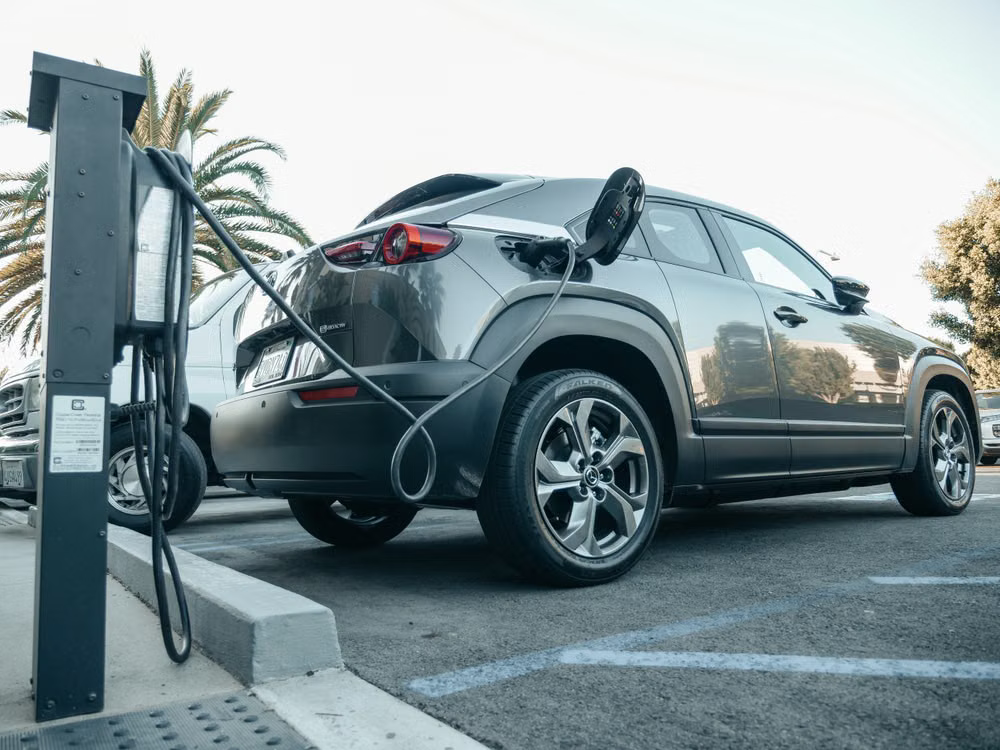
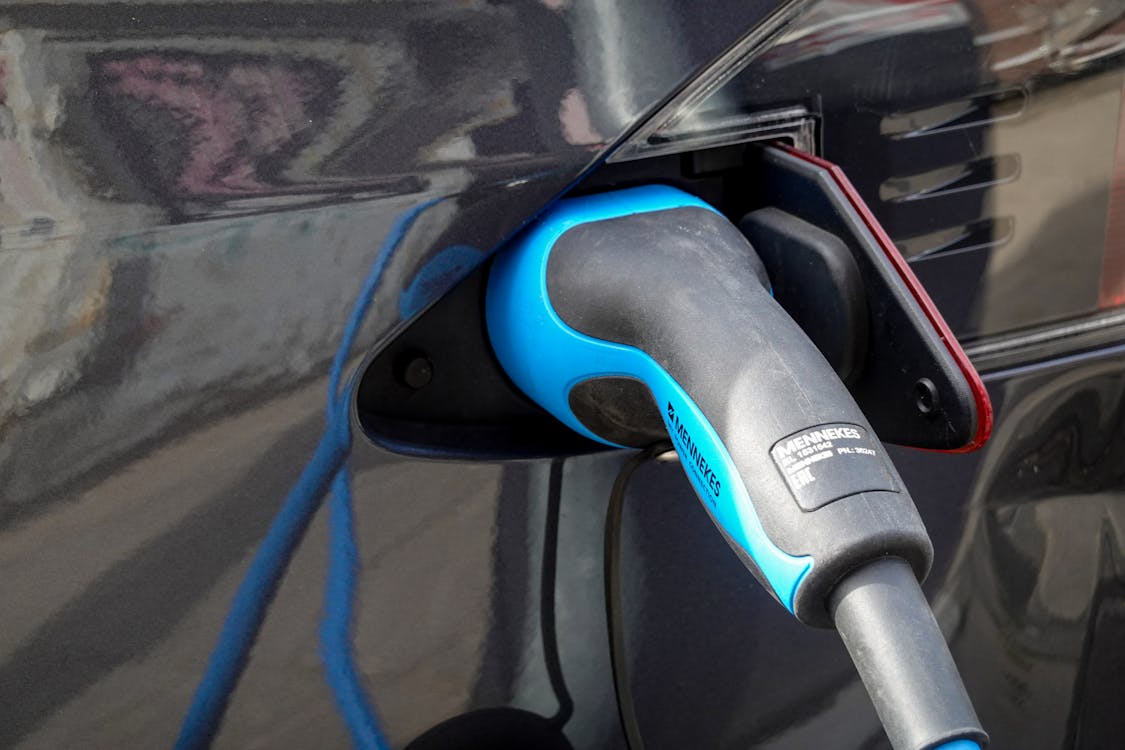
The electric car will help make the smart grid relevant to consumers. Right now most cars use inefficient engines fueled with gasoline or diesel. In the coming decades, many cars will use electricity. With a smart grid, renewable energy will do much of the charging. New electric cars from Nissan, Toyota, GM, Ford and others will use a charging standard J1772. The new charging units at home and work will include a smart meter chip. When a driver plugs-in, charging will follow preferences pre-established by the car owner. Many will prefer to save money and charge at night when rates are cheaper.
My test drive of the new Ford electric car for 2011 demonstrated that Ford is building a BEV that millions will want. The Ford Focus EV prototype provided a quiet and smooth drive for a prototype. A common platform is planned for compact vehicles ranging from engine drives, hybrids, plug-in hybrids, and battery-electric. By 2020, these vehicles could represent up to 25 percent of Ford’s production – that’s up to 2 million cars annually with electric drive systems and advanced battery packs.
Duke Energy and FPL Group committed to buy 10,000 plug-in vehicles in the coming decade, as they upgrade their fleets. The energy storage in these vehicles could eliminate the need for peaking plants and enable the expanded use of renewable energy. Duke Energy CEO Jim Rogers shared a few minutes with me before he spoke at the Society for Environmental Journalist conference. At first his commitments to clean fleets, energy efficiency, and renewable energy seem surprising, given that he is CEO of the nation’s third largest emitter of greenhouse gases. The emissions are largely the result of being the nation’s third biggest consumer of coal.
At the Society of Environmental Journalists Conference I asked Vice President Al Gore about energy innovation. He answered with a surprisingly optimistic discussion of energy efficiency; renewable energy innovation in wind, solar, enhanced geothermal, and use of waste heat; and a transformative super grid. He also had some predictions for the Copenhagen Climate Summit.