
New Cars that Already Meet 2016 Fuel Economy Standards

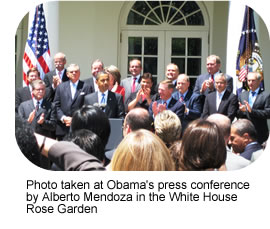
President Obama Announces 2016 CAFE Standards

By John Addison. President Barack Obama announced that automakers must meet average U.S. fuel-economy standards of 35.5 miles per gallon by 2016. This will be an exciting opportunity for automakers that already deliver vehicles that beat 35.5 mpg such as the Ford Fusion Hybrid, Mercury Milan Hybrid, Toyota Prius, Honda Insight, Honda Civic Hybrid, and the Mercedes Smart Fortwo. You can buy these gas misers today. A number of other vehicles offered in the U.S. now come close to the 2016 standard, and will see mileage improvements next year.

In Europe, over 100 models can be purchased that meet the 2016 standards, thanks to the popularity of cars that are smaller, lighter weight, and often use efficient turbo diesel engines.

Over the next three years, dozens of exciting cars will be introduced in the United States. Here are some offerings that we are likely to see in the next one to three years from major auto makers.

Ford will extend its current hybrid success with added models. During my recent test-drive of several vehicles that meet the 2016 requirement the midsized Ford Fusion Hybrid demonstrates that you can enjoy fuel economy in a larger car with comfort and safety. The Ford Fusion Hybrid has an EPA certified rating of 41 mpg in the city and 36 mpg on the highway. The car can be driven up to 47 mph in electric mode with no gasoline being consumed. Ford will start selling pure battery electric vehicles next year that will lower its fleet mileage average.

The best mileage SUV on the market is the Ford Escape Hybrid with 32 mpg. In 2012, Ford will also offer a plug-in version of the Escape Hybrid that will blow-away the 35.5 mile standard. Bringing the popular Fiesta to the U.S. with a 1.6L gasoline engine will also attract budget minded buyers looking for good mileage.

In discussing the new standards, Ford CEO Alan Mulally stated, “We are pleased President Obama is taking decisive and positive action as we work together toward one national standard for vehicle fuel economy and greenhouse gas emissions that will benefit the environment and the economy.”

General Motors plans to be the leader in plug-in hybrids starting with the Chevy Volt. It has a major opportunity to extend its E-Flex architecture to SUVs and trucks by 2016. For the price conscious buyer, the Chevy Spark hatchback with a 1.2L gasoline engine should deliver over 40 mpg.

There are almost 40,000 Chrysler GEM electric vehicles in use today. The GEM 25 mph speed limits them to only being popular in fleets, university towns, and retirement communities. Chrysler will extend its early U.S. electric vehicle leadership in 2010 with new freeway speed plug-in hybrids that can be driven 40 miles in electric mode, before engaging the gasoline engine – the Jeep Wrangler, an SUV, and the Town and Country Minivan. Over time, Chrysler can expand its ENVI family. Chrysler’s new stockholder Fiat will bring in exciting smaller cars and help expand the EV success.

Toyota will expand on the success of the Prius with more new hybrids. Since 2002, I have been driving a Prius that has averaged 41 mpg in real world driving that has included climbing hills with bikes on a roof rack and driving through snow with skis on the roof rack. The Prius will also be made available as a plug-in hybrid – hundreds of these PHEVs are now being tested by fleets. The modestly priced Yaris, which gets 32 mpg, is likely to also be offered as a hybrid that delivers over 40 mpg.

Honda is likely to be the first maker to meet 2016 CAFÉ requirements, building on its historical leadership in fuel economy. My mother has easily achieved over 45 mpg with her Honda Civic Hybrid. Now Honda is going after the Toyota Prius with the Honda Insight. The popular Fit, which gets 31 mpg, is likely to also be offered as a hybrid offering over 40 mpg. Look for more high mileage offerings from both Honda and Toyota as they compete for hybrid leadership.

Nissan’s Altima Hybrid delivers an impressive 34 mpg. Beyond hybrids, Nissan is determined to be the leader in battery electric vehicles. Working with fleet consortiums and major electric utilities, next year Nissan may seed the market with thousands of freeway speed electric vehicles. The Nissan EVs have ranges of at least 100 miles per charge. Clean Fleet Report EV Test Drive

This article does not pretend to be a complete review of what is coming, rather a taste of what is here and what will soon be here from six major automakers. Given economic challenges, not all forecasts will happen. There will be surprises, more new models, and new model names. Not all plans will be executed as Chrysler deals with bankruptcy reorganization and as GM considers one.

Meeting the CAFÉ standards by 2016 will not be a slam dunk for all of the automakers, but they will make it.  Historically, CAFE standards have not aligned with the EPA fuel economy determinations used in this article. For better and worse, flexfuel vehicles get artificially high numbers, making it easier for GM, Ford, and Chrysler to meet CAFE targets. Plug-in hybrid and EV ratings need to be finalized. To meet fleet average requirements, cars will need to average higher than 35.5; light-trucks and SUVs lower.

Trends to more efficient drive systems are a certainty. With oil prices now close to double the recent lows of earlier this year, these new vehicles bring important relief to every driver who wants to save at the pump.

John Addison publishes the Clean Fleet Report and details the future of transportation in his new book Save Gas, Save the Planet.

Share and Enjoy:
  • Digg
  • StumbleUpon
  • Facebook
  • Google Bookmarks
  • MySpace
  • Twitter
  • LinkedIn
By John Addison. John Addison publishes the Clean Fleet Report and speaks at conferences. He is the author of the new book - Save Gas, Save the Planet - now selling at Amazon and other booksellers.

10 Responses to “New Cars that Already Meet 2016 Fuel Economy Standards”

  1. tombartley May 21st, 2009, 10:17 pm

    I like the Nissan EV, but unless the drive cycle is pretty level, I wouldn’t say it gets at least 100 mile range between charges. Because of dead battery phobia history indicates that most drivers will plan on about 50 mile range. I would suggest 80 as a good number to stay out of trouble. For the average 40 mile commute it works just fine.

  2. FLoscrudato September 16th, 2009, 4:31 pm

    The CAFE standard must not be confused with the EPA Label ratings. The announcement regarding fuel economy standards can be very missleading. The federal regulations, as established by the NHTSA, are the CAFE or Corporate Average Fuel Economy rating for an auto maker. This CAFE rating, expressed in mpg, is different than the EPA Label rating, or the rating that all consumers see on the Monroney (Window) sticker for a new car. Both these ratings are expressed in MPG, however they are derived by different testinng methods. The CAFE rating, established back in the ’70s, utilizes less drive cycles that the new 2008 5-Cycle EPA rating method. The CAFE rating is always less that the EPA rating. It is highly unlikely that a consumer will obtain the CAFE fuel economy rating. There are many subcompact and compact vehicles, that are NOT hybrids, on the road today that can meet the 39 mpg CAFE rating.

  3. Oral Exam Police February 2nd, 2010, 11:08 am

    Saw your blog bookmarked on Delicious. I love your site and marketing strategy.

Trackbacks

  1. 3. Plug-in Drivers Get Charged - Save Gas, Save the Planet
  2. Finally, Sensible and Achievable Mileage Standards : blog.rv.net
  3. Architecture Blogs
  4. Is now the Best Moment to Shift Your Used Car? — 20 Places to… Autos
  5. UK car sales drop by almost a quarter — 20 Places to… Autos
  6. Green Cars Won’t Cost the Earth — 20 Places to… Autos
  7. Cash For Clunkers: smart fortwo Gets Maximum Incentive - CleanCarTalk

Leave a Reply